
S h a r e
Should fleets start considering hydrogen as a zero emission option?

Posted by
Andy Bruce
April 2023
You might think we’re getting slightly ahead of ourselves by considering hydrogen as a potential fleet fuel. After all, the battery electric revolution is only just beginning for many fleets.
But hydrogen will have a place in the fleet sector in the future, that’s for sure, although, what that will look like is still hard to determine.
So far two manufacturers have really committed to hydrogen in the form of fuel cells generating electricity to drive an electric motor. These are Hyundai with its Nexo and more prominently Toyota with its Mirai, now in second generation form.
But adoption has been hampered by the high cost to acquire the vehicles and the lack of refuelling infrastructure.
However, this hasn’t stopped BMW starting a fleet trial with hydrogen powered iX5s using fuel cells from its technology partner Toyota.
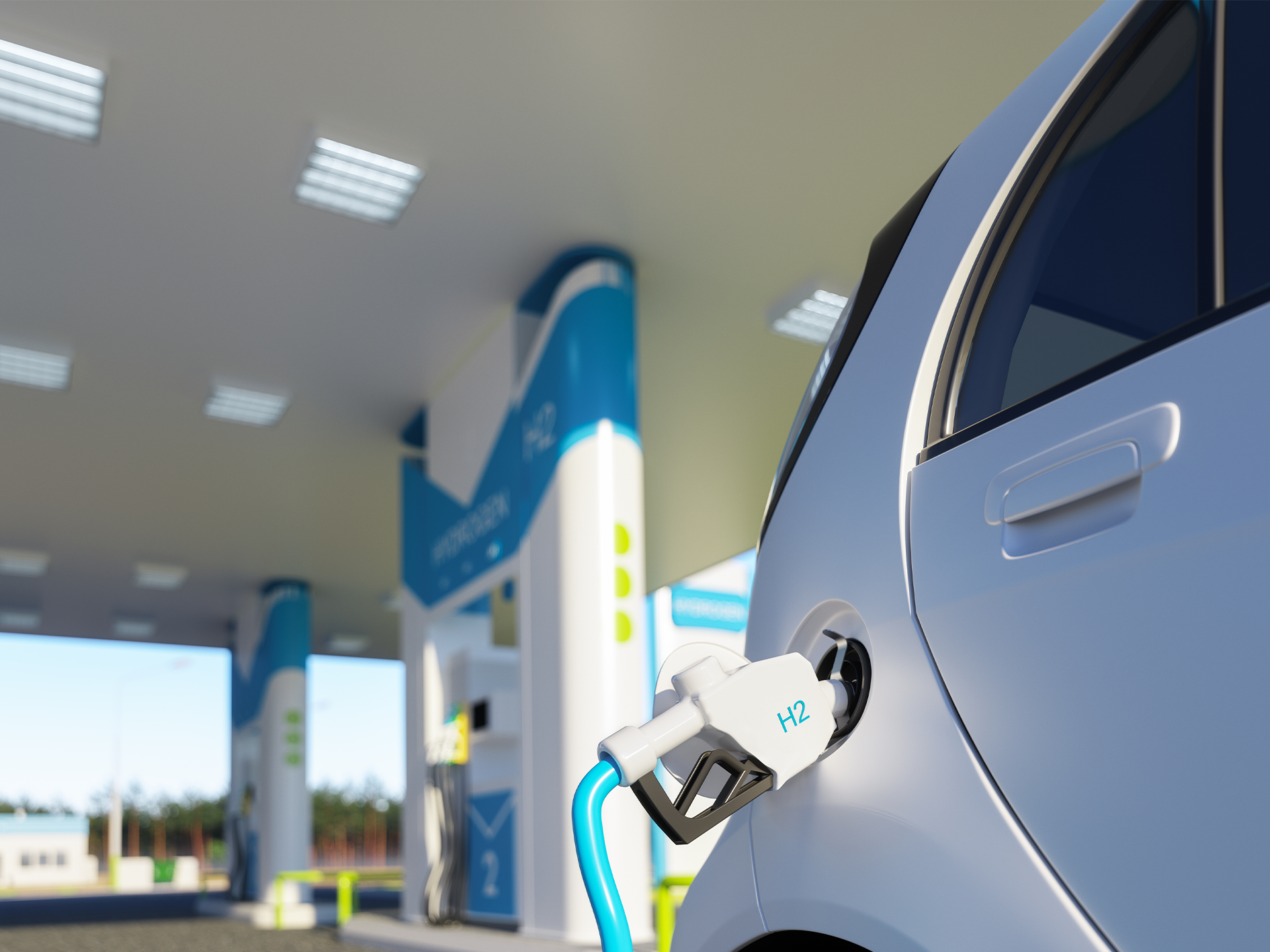
There are now 100 iX5 Hydrogen models – each with a range of over 300 miles – with a series of test groups to assess viability and drivability. What’s more, unlike battery electric vehicles, the hydrogen tanks take no time to refill: just three to four minutes.
So why is BMW doing this? BMW’s Chairman, Oliver Zipse, sees hydrogen as “the missing piece in the jigsaw when it comes to emission-free mobility”.
And the company has already gone on the record saying that hydrogen fuel cell technology will be part of its model offering in the future.
Across the BMW Group – which includes Rolls-Royce and MINI – the business wants to have more than 50 per cent of its sales to be emission free. So the company clearly sees a role for it.
What’s more, hydrogen offers an opportunity for BMW to hedge its bets. Given the current demand for battery production and the rare materials required to make batteries, some elements may become scarce – or there may not be enough of the gigafactories (the large plants where batteries are made) to meet demand. So that’s where hydrogen can fit in.
There are issues to overcome and barriers to adoption, certainly. Making green hydrogen is one of them (that’s because splitting hydrogen from water is energy intensive and at the moment mostly gas-based fuels are used for this process rather than renewable energy).
And then there’s the refilling infrastructure, which remains a weak link.
But then, not so long ago, these sorts of issues were facing early adopters of battery electric vehicles.
And companies such as Toyota keep pushing the boundaries of what can be achieved with hydrogen. It has a Toyota Corolla race car running on liquid hydrogen in the domestic Super Taikyu Series, for example.
The company has also stated this week that it will develop its hydrogen fuel cells for commercial vehicle applications where it sees potential for the extended distances fuel cells can travel without the need for refuelling.
It may be that hydrogen finds its home in heavy goods vehicles and coaches. Hyundai’s hydrogen Xcient truck, for example, is already proving popular in Europe and is now expanding to the US.
Or it might be in light commercial vehicles, such as those being developed for fleet deployment by Stellantis brands, such as Vauxhall and its Vivaro-e Hydrogen model which will be available this year. Engineers point to its longer running distance – 249 miles on its hydrogen tank – with no loss of carrying capacity.
What these emerging applications suggest is that hydrogen will find a role in fleet – and we must all be open to the opportunities it presents for zero emission running.
You also might like…
If you liked this article then check out our posts about similar topics
Changan Deepal S05 First Drive: A New Name to Take Seriously
Hot on the heels of September’s SMMT figures showing Chinese manufacturers taking a growing share of UK new car regist...
The exponential growth of salary sacrifice
The UK new electric car market just grows and grows, thanks in no small part to the rocketing popularity of salary sacri...
Coping with the high cost of diesel
The pressure on transportation costs is enormous at the moment The US-Iran conflict shows no signs of easing and the p...
Outsourcing Car Fleet Management
Managing a company fleet takes time, specialist knowledge and careful cost control From sourcing vehicles and managing r...
Fleet Alliance recognised as one of the UK’s Best Workplaces in Financial Services & Insurance 2026
Fleet Alliance has been recognised as one of the UK’s Best Workplaces in Financial Services & Insurance™ 2026 T...
Euro 7 – What it means for fleets
Euro 7 is coming, and the new legislation will influence how fleets acquire, maintain and manage their vehicles in the y...
Darren Stevens Takes on Head Shave Challenge to Raise Funds for MS
On Wednesday the 19th of August, Fleet Alliance colleague Darren Stevens will be shaving his head to raise funds and awa...
Electric cars spark increase in company car drivers
The number of company car drivers is on the rise And the rise is driven by one thing: electricity Perhaps I should qu...
Ready to make the management of your fleet more efficient?
Request a call back