
S h a r e
Five fleet management tips for large fleets

Posted by
Rob Wentworth-James
July 2026
Fleet management has changed beyond recognition since the days when the main priority was keeping CO2 below a single tax threshold.
Today, the best-run fleets are not simply choosing vehicles and managing renewals. They are controlling cost, reducing administration, supporting drivers, improving compliance, and helping the wider business deliver against sustainability and ESG commitments.
For larger fleets, that means one thing: fleet management needs to be strategic, data-led and commercially robust.
Here are five fleet management tips every large fleet should be considering.
1. Put every vehicle through competitive tendering

One of the biggest opportunities for large fleets is also one of the simplest: make sure every lease quote is genuinely tested against the market.
Many businesses still rely on a single funder or a legacy supplier relationship. That can feel simple, but it does not always create the commercial tension needed to secure the best rental on the day.
A panel funding approach gives you the best of both worlds: competitive pricing from multiple funders, combined with a single point of management for the business and its drivers.
For large fleets, even a small percentage saving on lease rentals can translate into a significant annual reduction in cost. The key is to make tendering part of the everyday operating model, not something that only happens at contract renewal. If cost is important to you, Fleet Alliance are saving our clients a running average of 9.5% on their lease costs so far this year.
2. Manage whole-life cost, not just monthly rental
The cheapest monthly rental is not always the cheapest vehicle to operate.
A strong fleet policy should consider the full cost picture, including lease rental, maintenance, tyres, fuel or electricity, insurance, taxation, downtime, excess mileage, end-of-contract charges and driver suitability.
That is particularly important as fleets continue to transition to electric vehicles. EVs can offer compelling tax and running cost advantages, but they need to be introduced with the right vehicle choice, charging support, mileage analysis and driver education.
For larger fleets, whole-life cost modelling helps remove guesswork from vehicle policy. It also helps businesses make better decisions around grades, choice lists, replacement cycles and whether a vehicle is genuinely right for the role it needs to perform.
3. Use technology to reduce administration
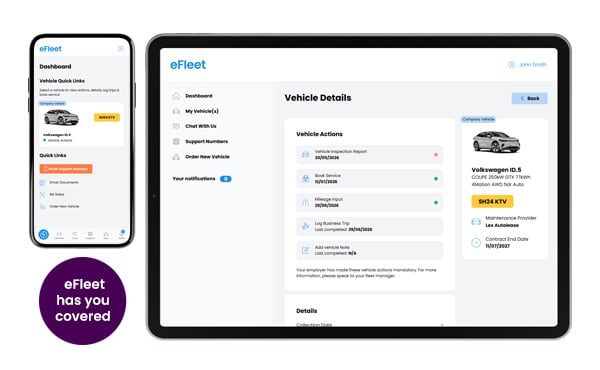
Large fleets generate a constant stream of admin: orders, renewals, mileage updates, licence checks, maintenance reminders, accident management, fuel or EV card queries, invoices, driver questions and reporting requests.
If that information is spread across spreadsheets, funder portals, emails and supplier systems, the fleet becomes harder to control.
The right fleet management technology should give the business one consolidated view of vehicles, drivers, costs, mileage, compliance, risk and emissions. It should also help drivers self-serve, so they can access policy documents, support contacts, vehicle information and routine fleet services without needing to email the fleet team every time.
The result is not just less admin. It is better control, faster decisions and a clearer audit trail.
4. Strengthen compliance and driver risk management
Fleet compliance is not a box-ticking exercise. It is a core part of employer duty of care.
That means having robust processes for licence checking, vehicle inspections, MOT and service reminders, grey fleet management, insurance checks, accident reporting, driver communications and policy acceptance.
For larger fleets, the risk is not usually that nothing is being done. It is that too much is being done manually, inconsistently or without a clear audit trail.
Technology-led compliance gives the business evidence that checks have been completed, exceptions have been followed up, and drivers have been kept informed. It also reduces the burden on internal teams who would otherwise be chasing paperwork and updating records manually.
A well-managed fleet should make compliance visible, proactive and easy to evidence.
5. Build ESG into fleet policy
Fleet is now a major part of the ESG conversation.
The vehicles a business operates, the emissions they produce, the way drivers are supported, and the quality of data available all matter to the wider organisation. For many companies, fleet is one of the most practical areas where sustainability targets can be turned into measurable action.
That does not mean switching every vehicle overnight. It means building a structured transition plan based on operational need, driver mileage, charging access, vehicle availability, whole-life cost and carbon reduction.
A good fleet strategy should help the business answer important questions:
Which roles are ready for EV now?
Where do plug-in hybrids still make sense?
Which drivers need charging support?
How will emissions be measured and reported?
How can EV salary sacrifice extend the benefit of electric cars to more employees?
The strongest fleets are not treating ESG as a separate project. They are building it into policy, procurement, reporting and driver engagement.
Better fleet management is about control
The best fleet management advice I can give is this: do not treat your fleet as a collection of vehicles. Treat it as a business-critical operation.
That means asking the right questions:
Are we getting the most competitive lease rentals?
Are we reducing internal administration?
Do we have one clear view of our fleet data?
Are our drivers properly supported?
Can we evidence compliance?
Are we moving towards our sustainability goals?
At Fleet Alliance, our role is to help businesses answer those questions with confidence. Through competitive tendering, e-Fleet technology, proactive driver support and strategic fleet management, we help large fleets reduce cost, reduce admin and improve control.
Fleet management has moved on. The opportunity is to make sure your fleet has moved with it.
Ready to make the management of your fleet more efficient?
Speak to Fleet Alliance about how we can help you reduce costs, improve control and transform the way your fleet is managed.
You also might like…
If you liked this article then check out our posts about similar topics
Changan Deepal S05 First Drive: A New Name to Take Seriously
Hot on the heels of September’s SMMT figures showing Chinese manufacturers taking a growing share of UK new car regist...
The exponential growth of salary sacrifice
The UK new electric car market just grows and grows, thanks in no small part to the rocketing popularity of salary sacri...
Coping with the high cost of diesel
The pressure on transportation costs is enormous at the moment The US-Iran conflict shows no signs of easing and the p...
Outsourcing Car Fleet Management
Managing a company fleet takes time, specialist knowledge and careful cost control From sourcing vehicles and managing r...
Fleet Alliance recognised as one of the UK’s Best Workplaces in Financial Services & Insurance 2026
Fleet Alliance has been recognised as one of the UK’s Best Workplaces in Financial Services & Insurance™ 2026 T...
Euro 7 – What it means for fleets
Euro 7 is coming, and the new legislation will influence how fleets acquire, maintain and manage their vehicles in the y...
Darren Stevens Takes on Head Shave Challenge to Raise Funds for MS
On Wednesday the 19th of August, Fleet Alliance colleague Darren Stevens will be shaving his head to raise funds and awa...
Electric cars spark increase in company car drivers
The number of company car drivers is on the rise And the rise is driven by one thing: electricity Perhaps I should qu...
Ready to make the management of your fleet more efficient?
Request a call back