
S h a r e
Taking the fear out of charging on the road

Posted by
Andy Bruce
July 2023
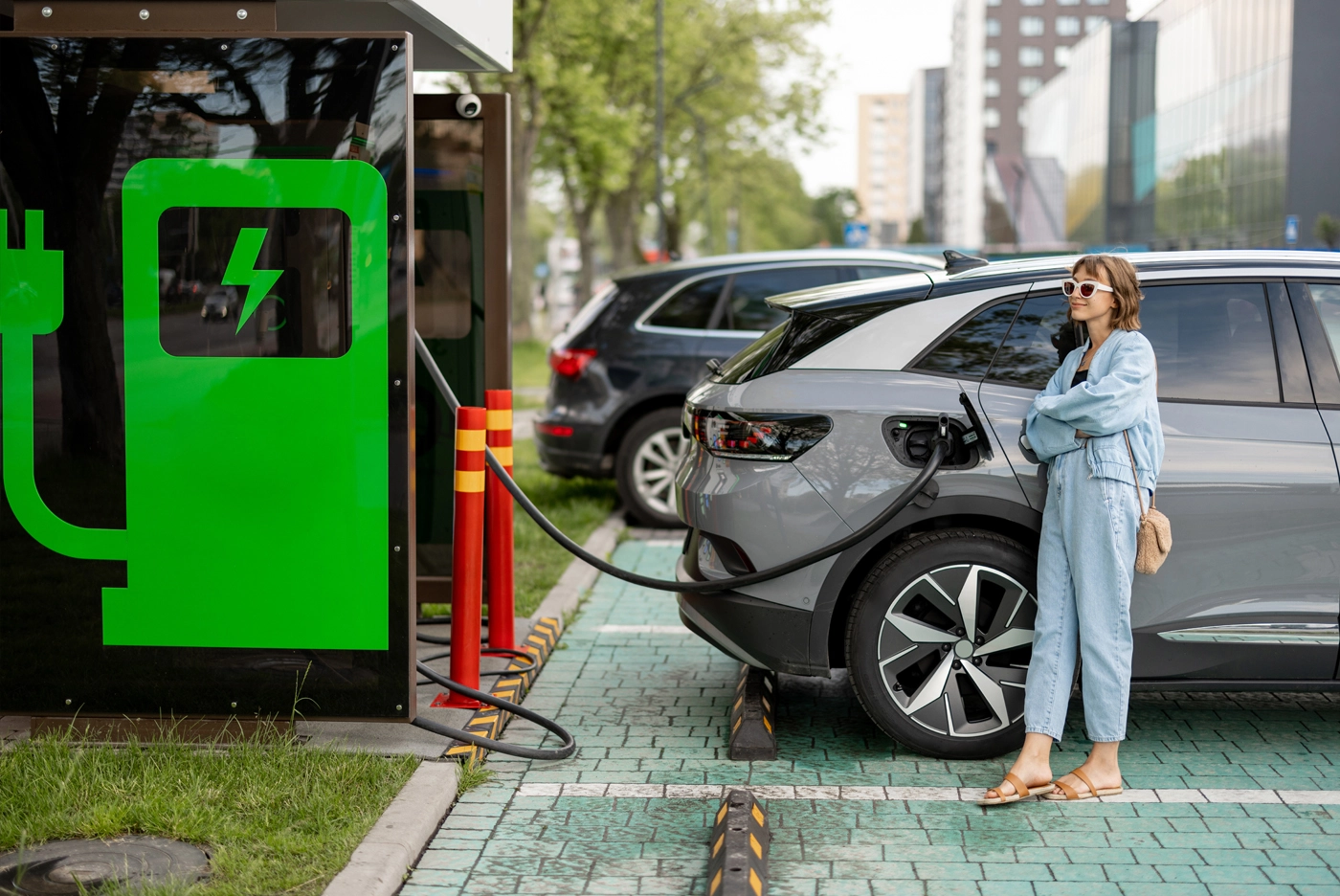
If there is one thing that concerns me about driving an EV, then it’s this: will the EV chargers I’m heading for be (a) working and (b) occupied.
Range anxiety – well that’s largely a thing of the past. Most new EVs are more than capable of over 200 miles on a single charge.
But charger anxiety is real.
It’s true that experienced EV drivers will always have a plan A, B and C for the aforementioned but this lack of certainty is definitely holding back businesses and consumers from switching to electric vehicles.
Because if there’s one thing we all like then it’s certainty.
Generally speaking you expect to arrive at a fuel filling station knowing what price you are going to pay per litre before pumping the fossil fuel of your choice into your car. Without queuing. And then pay for your fuel with a fuel card, credit card or debit card – possibly even cash.
That’s not the same experience for an EV driver.
It’s unlikely you’ll know the cost per kW ahead of the charging process. You can arrive at an EV charger and find it out of order. And when it comes to paying you might need one of many apps prior to engaging the charger in what it’s supposed to do. It’s frustrating. But also unsettling, particularly for those potential EV drivers balanced between choosing existing petrol/diesel technology or the future of emission free motoring.

So the Government’s latest initiative – The Public Charge Point Regulations – which is due to become law shortly, is to be warmly welcomed.
At a stroke it offers visibility on price, a guarantee on reliability, ease of payment and live data information.
This is terrific news, although I will add that it is being phased in over a period of time once it becomes law.
But let’s have a look at what’s on offer:
First, there must be contactless payment available for all chargers delivering over 8kW. At a stroke that eliminates having the correct app with money loaded to it, and normalises ‘paying for fuel’. Coming in later will be the requirement to offer roaming, where payment can be made by a universal provider – such as a fuel card.
Second there must be 99% uptime on fast chargers (50kW and above). For fleets in particular this will be truly welcomed. What’s more, the reliability data will be made public.
Third, there must be a helpline available 24/7 to provide assistance to drivers struggling to charge.
And, finally, the charge point operators must use open data so that the public can assess the suitability, availability and reliability of chargers and make pricing transparent – expect to see similar style fuel price totem poles at chargers displaying the price per kW.
Much of this seems common sense. And of course it is.
But the haphazard nature of growth is typical of a technology during its growing phase. Regularising what consumers can expect is a major step forward. We can’t wait for charging an EV to be normalised – and breaking down yet another barrier to EV adoption.
You also might like…
If you liked this article then check out our posts about similar topics
Outsourcing Car Fleet Management
Managing a company fleet takes time, specialist knowledge and careful cost control From sourcing vehicles and managing r...
Fleet Alliance recognised as one of the UK’s Best Workplaces in Financial Services & Insurance 2026
Fleet Alliance has been recognised as one of the UK’s Best Workplaces in Financial Services & Insurance™ 2026 T...
Euro 7 – What it means for fleets
Euro 7 is coming, and the new legislation will influence how fleets acquire, maintain and manage their vehicles in the y...
Darren Stevens Takes on Head Shave Challenge to Raise Funds for MS
On Wednesday the 19th of August, Fleet Alliance colleague Darren Stevens will be shaving his head to raise funds and awa...
Electric cars spark increase in company car drivers
The number of company car drivers is on the rise And the rise is driven by one thing: electricity Perhaps I should qu...
Rethinking fleet strategy: why joined-up decision-making matters
Most fleet strategies do not underperform because one individual decision is fundamentally wrong They underperform becau...
Martin Brown marks 30 years in vehicle leasing
Today marks 30 years since Martin Brown began his career in vehicle leasing – coincidentally, on his 21st birthday ...
Fleet Alliance named one of the UK’s Best Workplaces for Women™ for fifth time
Fleet Alliance has once again been recognised as one of the UK’s Best Workplaces for Women™, marking the fifth time ...
Ready to make the management of your fleet more efficient?
Request a call back