
S h a r e
Readable roads

Posted by
Martin Brown
December 2013
What was the last book you read?
I have to admit I’m more of an occasional reader: when I’m on holiday I like the odd thriller while lazing by the poolside.
Otherwise it’s a diet of news digests on my phone and tablet, and the occasional football magazine. Oh, and The Economist. Of course. Naturally.
But there’s a good chance that if you’re an occasional reader like me, your car has done more reading than you.
No, true. More and more cars need to ‘read’ roads as the technology in them becomes more progressive. Have you noticed how your satnav can tell you the speed limit of the road on which your are travelling?
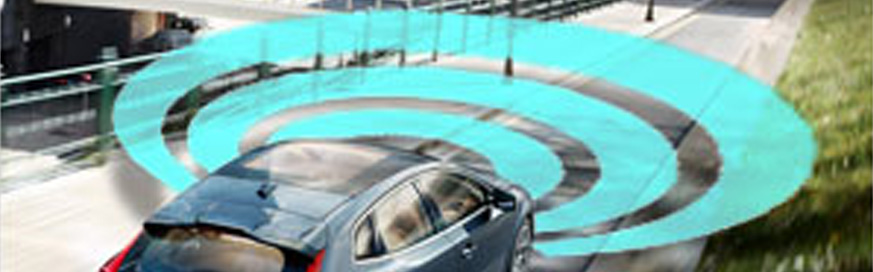
And how about lane assist? Lane assist provides warnings if you start to stray over the white lines on the motorway – perhaps signifying inattention or possible sleepiness – with a beep or pressure on the steering wheel to rectify the direction of travel.
To do this, the car is literally ‘reading’ the road ahead.
By 2025 half the cars on the roads will be able to read road signs and road markings.
But what if the metaphorical road pages are torn or missing? What then? How will the car ‘interpret’ correctly the ‘words’ on the road?
This is exactly the fear of the European Road Assessment Programme (EuroRAP) – an international not for profit association dedicated to saving lives through safer roads.
In association with Euro NCAP, the crash test people, they’ve raised the question of illegible roads in a publication called ‘Roads that cars can read’.
By 2025 they reckon that half the cars on the roads will be able to read road signs and road markings. Which means that commonality – or readability – is required: so that means standard shapes, sizes and typography for signs.
And, simply, better roads. We have five star crash worthy cars – it’s about time we had the five star roads too.
Interestingly, when the London underground was built, each line had distinctive colours and each station distinctive patterns in its tiling. This wasn’t just decorative. It allowed much of the illiterate population of turn of the century London to ‘read’ where they were on the underground system by interpreting the signs correctly.
Cars now need the same level of ‘literacy’ with roads they can ‘read’. Which, in turn, will make for safer roads.
You also might like…
If you liked this article then check out our posts about similar topics
Changan Deepal S05 First Drive: A New Name to Take Seriously
Hot on the heels of September’s SMMT figures showing Chinese manufacturers taking a growing share of UK new car regist...
The exponential growth of salary sacrifice
The UK new electric car market just grows and grows, thanks in no small part to the rocketing popularity of salary sacri...
Coping with the high cost of diesel
The pressure on transportation costs is enormous at the moment The US-Iran conflict shows no signs of easing and the p...
Outsourcing Car Fleet Management
Managing a company fleet takes time, specialist knowledge and careful cost control From sourcing vehicles and managing r...
Fleet Alliance recognised as one of the UK’s Best Workplaces in Financial Services & Insurance 2026
Fleet Alliance has been recognised as one of the UK’s Best Workplaces in Financial Services & Insurance™ 2026 T...
Euro 7 – What it means for fleets
Euro 7 is coming, and the new legislation will influence how fleets acquire, maintain and manage their vehicles in the y...
Darren Stevens Takes on Head Shave Challenge to Raise Funds for MS
On Wednesday the 19th of August, Fleet Alliance colleague Darren Stevens will be shaving his head to raise funds and awa...
Electric cars spark increase in company car drivers
The number of company car drivers is on the rise And the rise is driven by one thing: electricity Perhaps I should qu...
Ready to make the management of your fleet more efficient?
Request a call back