
S h a r e
BYD Sealion 7 First Drive: Making Waves in the EV SUV Market
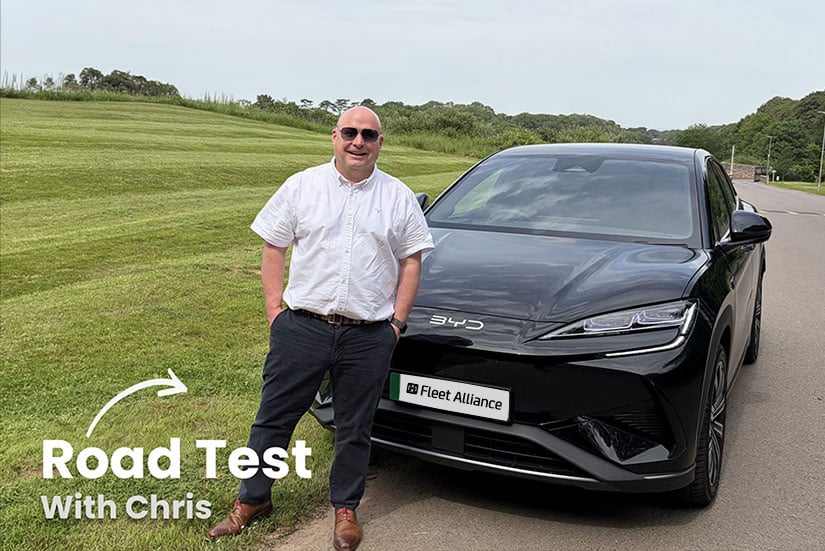

Posted by
Chris Rowthorn
June 2026
BYD’s growth in the UK has been nothing short of explosive. Having entered the market as a relative newcomer in 2023, the brand has rapidly become one of the country’s fastest-rising car manufacturers by 2025–2026.
That growth has been driven by aggressive retail expansion, competitive pricing and a rapidly widening model range. In Q1 2026, BYD achieved record-breaking UK sales with 21,337 total vehicle registrations, outselling Tesla by a significant margin. Capturing more than 7% of the pure EV market, and up to 9.5% when combining both EVs and plug-in hybrids, BYD recorded a year-on-year UK sales increase of 134% — cementing its place as one of the most impressive automotive growth stories of recent years.
The Sealion 7 is currently the most expensive vehicle in BYD’s UK range, aiming to bring performance, technology and value to the fiercely competitive mid-sized SUV sector. As part of BYD’s growing “Ocean” family, it joins the Seal saloon and Seal U hybrid SUV, giving buyers a fully electric alternative that combines striking styling, impressive technology and strong performance credentials.
With established rivals such as the Tesla Model Y, Volkswagen ID.5 and Skoda Enyaq Coupé firmly in its sights, the Sealion 7 is not just entering the market — it is making a big splash.
First impressions
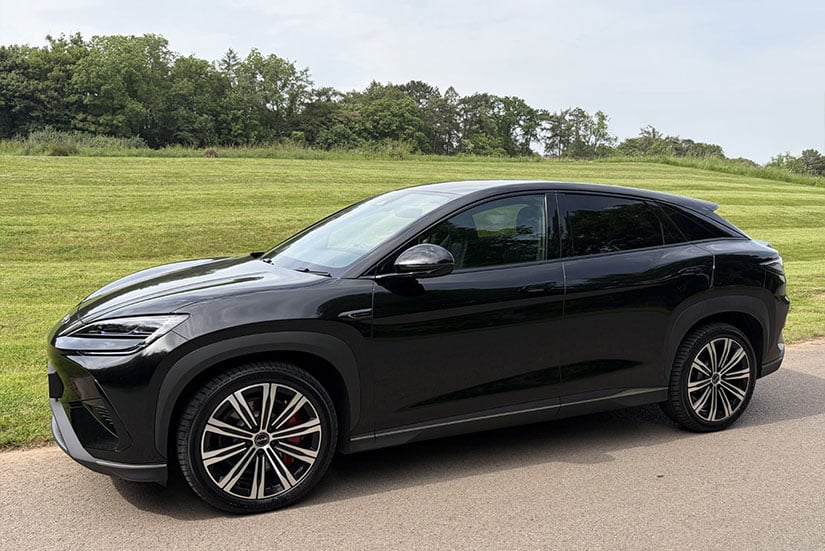
Finished in black with contrasting red brake calipers, the Sealion 7 certainly knows how to make an entrance.
It is an imposing vehicle, blending sleek styling with an underlying sense of menace, particularly in dual-motor form. Despite its substantial size, it avoids looking bulky thanks to its low roofline and coupé-inspired silhouette.
It immediately feels like a premium offering and, judging by the attention it attracted on the road, it has enough presence to turn heads without shouting too loudly.
Design
The Sealion 7 is unmistakably a BYD.
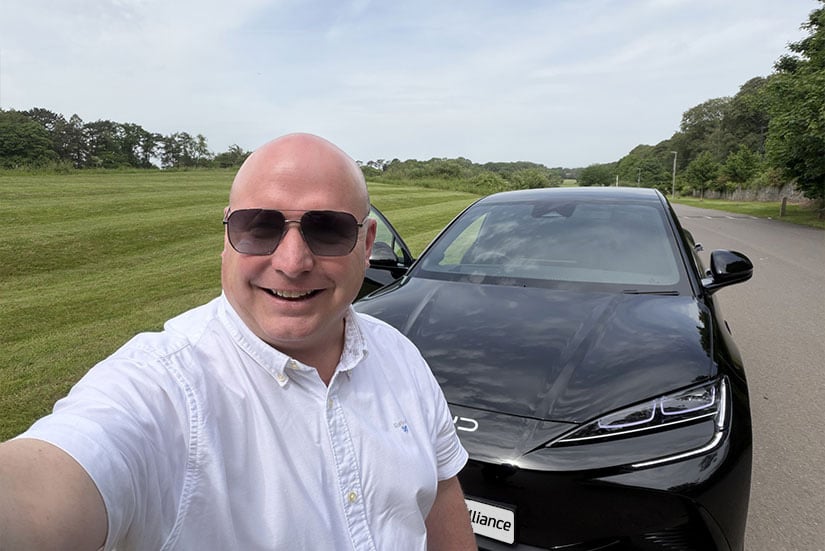
The front end adopts the brand’s now-familiar X-shaped design language, while slim LED lighting and sculpted bodywork give it a modern, purposeful appearance. At almost 4.8 metres long, it is a sizeable SUV, but clever proportions and flowing lines help disguise its footprint.
From the side, the sweeping roofline and flush door handles contribute to an aerodynamic profile, while the rear features a full-width light bar that mirrors other models in the Ocean range.
It is a handsome design that manages to feel both contemporary and distinctive in a segment where many electric SUVs can look a little too generic.
Model matrix
The Sealion 7 is available in three main trim levels, with the primary differences between them revolving around drivetrain, battery capacity, range and luxury interior touches.
Despite the Comfort being the entry point to the range and the only single-motor model in the line-up, it is still generously equipped. Standard kit includes 19-inch wheels, heated and ventilated front seats, and BYD’s 15.6-inch rotating touchscreen.
The Design adds a dual-motor set-up, with the additional motor and larger alloys resulting in a slightly reduced driving range when compared with the Comfort.
The Excellence brings the largest battery pack, which offsets the additional power consumption and gives it the longest range in the line-up. It also upgrades the interior with premium Nappa leather seats and a Head-Up Display.
On the road
My test car was the range-topping Excellence Dual Motor AWD, and its performance is genuinely impressive.
The 0–62 mph sprint takes just 4.5 seconds, delivering the kind of acceleration that can catch passengers off guard. Yet what impressed most was not just the straight-line speed, but the Sealion 7’s overall refinement.
The ride quality is comfortable, road noise is well suppressed, and the steering is accurate without feeling overly artificial. While some newer Chinese EVs can occasionally feel a little over-eager or over-assisted, the BYD adopts a more measured approach. It feels confidence-inspiring and easy to drive quickly without becoming intimidating.
Body control remains composed through corners, while the all-wheel-drive system provides reassuring traction in less-than-perfect conditions.
This is not a sports SUV, but it strikes an excellent balance between comfort and performance for everyday UK roads.
Cabin and tech
Step inside and the Sealion 7 immediately feels upmarket.
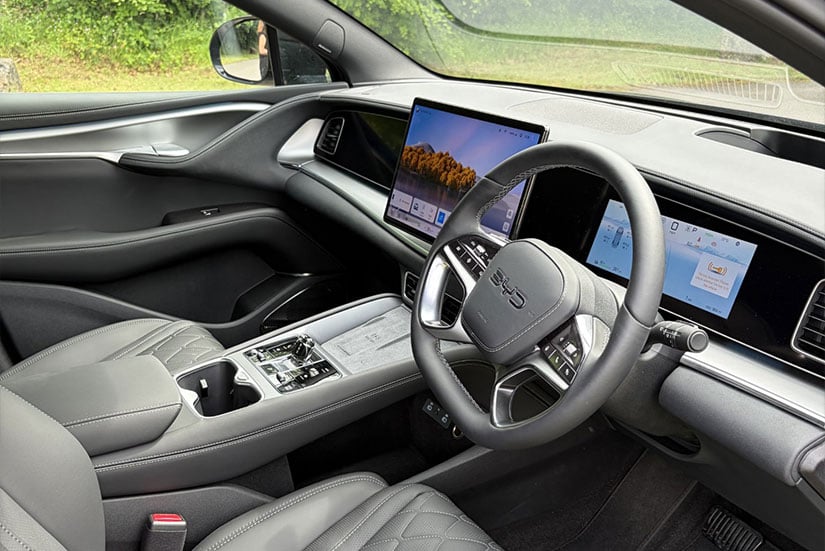
Material quality is impressive throughout, with soft-touch surfaces and a modern design that rivals more established premium brands. Dominating the dashboard is BYD’s signature rotating touchscreen, which can switch between portrait and landscape orientations at the touch of a button.
Some may still view the rotating screen as a novelty, but it genuinely improves usability depending on the application being used.
The panoramic glass roof floods the cabin with natural light, enhancing the already spacious feeling inside. Wireless smartphone connectivity, a comprehensive suite of driver assistance systems and a premium audio set-up all contribute to a well-equipped package.
Crucially, the technology feels intuitive rather than overwhelming, which is not always the case in modern EVs.
One small grumble — and you may reasonably file this under “First World problems” — is that it was a beautifully sunny day, and the brightness made it difficult to see the Head-Up Display clearly. Based on typical UK weather, I doubt this will be an issue encountered too often.
Practicality check
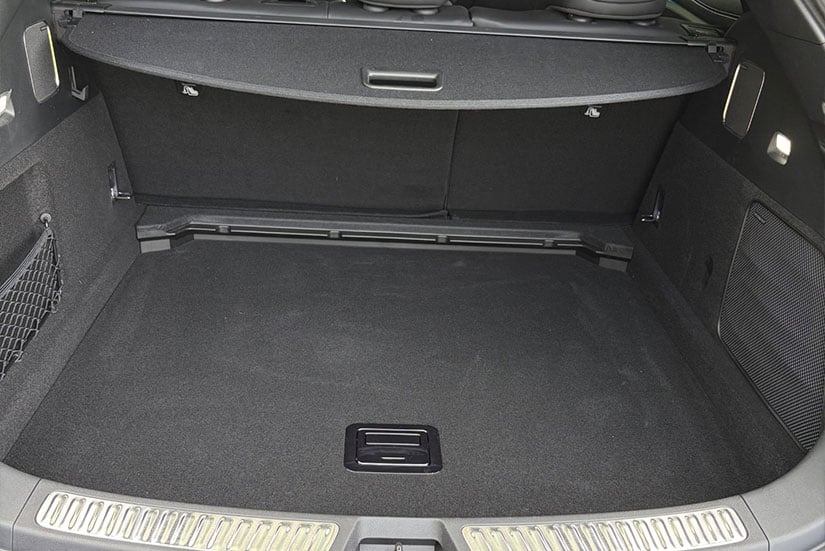
Boot space: The Sealion 7 offers 520 litres with the seats up, increasing to 1,789 litres with the seats folded. There is also an additional 58 litres in the frunk, ideal for storing charging cables or even a small overnight bag.
That places it solidly in the middle of the pack compared with key competitors. It is plenty big enough to be comparable with an iX2 or Lexus RZ, but not class-leading like the Tesla Model Y or even the slightly larger Skoda Enyaq, which offers 585 litres.
Electric tailgate: Despite its coupé-inspired styling, the Sealion 7 remains a highly practical family SUV. The boot is accessed via a standard electric tailgate, making loading and unloading straightforward.
Electric range: Range is competitive across the line-up, with the Excellence model capable of travelling up to 312 miles on the WLTP cycle. Fast-charging capability also helps make longer journeys more manageable, reducing downtime when travelling further afield.
Storage and cup holders: The Sealion 7 passes the extra-shot flat white test with ease. Storage throughout the cabin is equally impressive, with large door bins, a sizeable centre console and plenty of cup holders for front and rear occupants.
Rear passenger space is generous too, with ample legroom and headroom despite the sloping roofline.
Verdict
The BYD Sealion 7 is a serious contender in the electric SUV market.
It is better looking than the Volkswagen ID.5, offers stronger value than a Tesla Model Y, and combines impressive performance with a genuinely premium cabin.
For company car drivers, it could prove particularly appealing through Salary Sacrifice schemes, where its blend of low Benefit-in-Kind taxation, generous equipment levels and competitive pricing makes a compelling business case.
Most importantly, however, it succeeds as a car.
Stylish, practical, fast and well-equipped, the Sealion 7 demonstrates just how quickly BYD has established itself as a major force in the UK electric vehicle market.
This is not just another new EV SUV. It is BYD showing that it can compete with the established names — and, in several key areas, beat them at their own game.
You also might like…
If you liked this article then check out our posts about similar topics
Euro 7 – What it means for fleets
Euro 7 is coming, and the new legislation will influence how fleets acquire, maintain and manage their vehicles in the y...
Darren Stevens Takes on Head Shave Challenge to Raise Funds for MS
On Wednesday the 19th of August, Fleet Alliance colleague Darren Stevens will be shaving his head to raise funds and awa...
Electric cars spark increase in company car drivers
The number of company car drivers is on the rise And the rise is driven by one thing: electricity Perhaps I should qu...
Rethinking fleet strategy: why joined-up decision-making matters
Most fleet strategies do not underperform because one individual decision is fundamentally wrong They underperform becau...
Martin Brown marks 30 years in vehicle leasing
Today marks 30 years since Martin Brown began his career in vehicle leasing – coincidentally, on his 21st birthday ...
Fleet Alliance named one of the UK’s Best Workplaces for Women™ for fifth time
Fleet Alliance has once again been recognised as one of the UK’s Best Workplaces for Women™, marking the fifth time ...
Is your fleet costing your drivers £1,200 a year?
It’s quite a sobering thought: drivers could be saving as much as £1,200 each year - more in some rural areas - if th...
The cheapest new car in Britain is now electric – and that changes the conversation
For years, the argument against electric cars has been fairly simple: they are good in theory, expensive in practice Th...
Ready to make the management of your fleet more efficient?
Request a call back